
Streamlining, Optimizing, and Advancing
Medical Education Institutions
At MedHub and BoardVitals, we are acutely aware of the critical role you play in training the healthcare professionals who will shape the future of medicine and impact community health. We also know that you only have so much time in the day, and you need to focus that time on what matters: educating the next generation of clinicians.
That’s why we’re here to provide leaders like you with healthcare education solutions for institutional and curricular oversight, optimized accreditation outcomes, and performance analytics so you can better prepare current and aspiring healthcare professionals.

What Sets MedHub and BoardVitals Apart: Our Focus on Your Success
Our commitment to your success is unwavering. We provide personalized support and a wealth of resources, including an on-demand Learning Portal and comprehensive training series, to empower your institution's journey towards excellence.
Our solutions are designed with the learner in mind, offering a comprehensive approach to enhance educational outcomes. From robust content to advanced technology, we provide the tools and insights necessary for effective training and learner development.
What Our Partners Say

“MedHub has not only provided us with an outstanding product and service but has really served as an ally in our continuous quality improvement measures. Between the outstanding customer service provided, training, and learning portal tools, MedHub offers us solutions and an alliance to improve and optimize processes that are essential for medical education and accreditation.”
Corrin Sullivan, PhD
Assistant Dean of Curriculum, University of Nevada Las Vegas,
Kirk Kerkorian School of Medicine
“While MedHub is an innovative, intuitive, and well-organized system, it’s the people behind MedHub who make it the superior selection.”
Cynthia Geyer
Administrative Director, GME, University of Iowa Hospitals and Clinics

"I have had the opportunity to work with Rhea (MedHub GME Consultant) quite a bit. She is quick to reply to emails, friendly, and very knowledgeable. She has helped us out while we have been trying to learn MedHub. We appreciate her expertise as we still get our bearings and continue to learn. Rhea is a great asset!"
Marcie Becker, MEd
Director, Graduate Medical Education, MetroHealth
Streamlining Medical Education with Data-Driven Insights
Gain institutional oversight with a cohesive solution of medical training content, powerful technology, and top-tier expertise. The combination of MedHub and BoardVitals technologies turns previously isolated datapoints and information fragments into actionable insights helping you mitigate risk of:
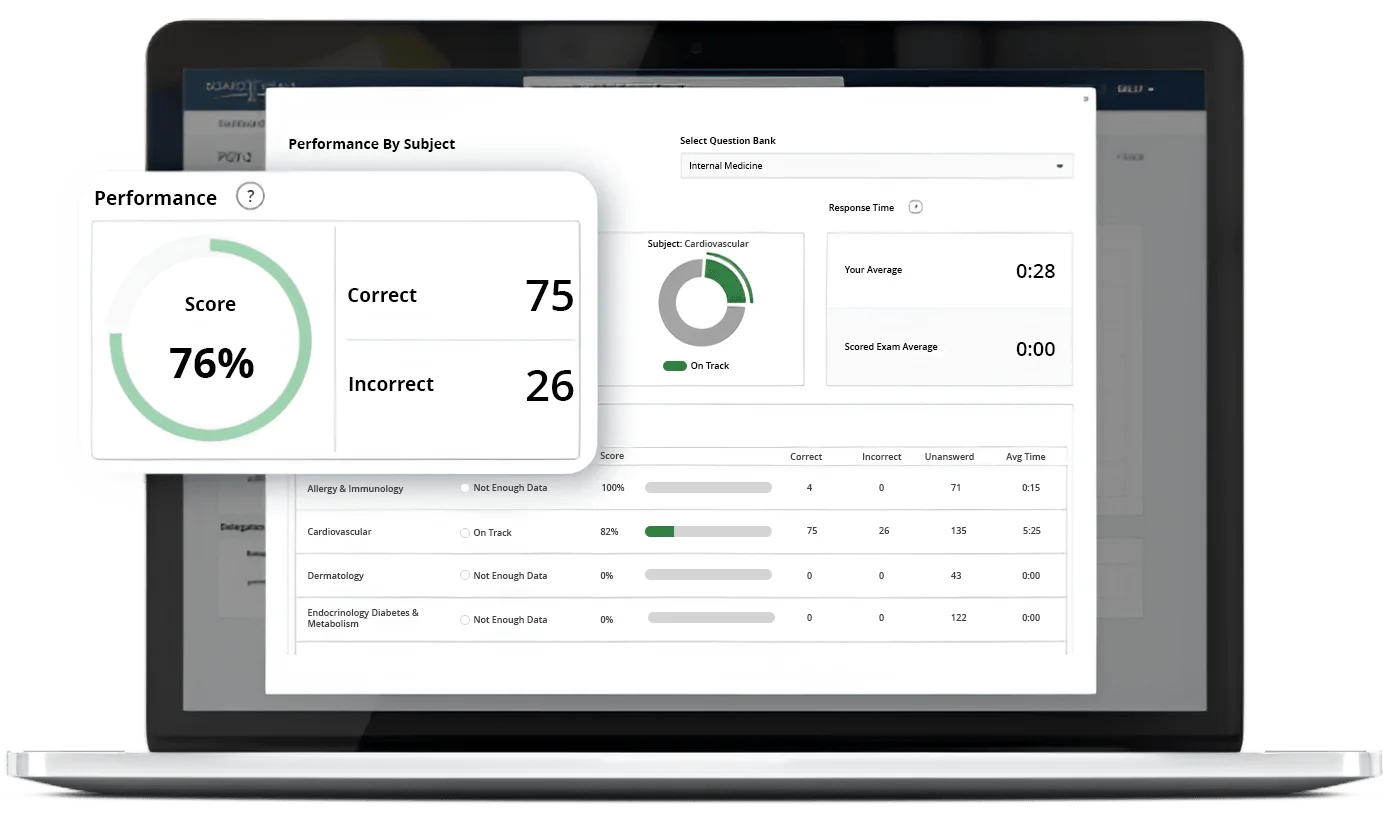
Together, MedHub and BoardVitals are reshaping the landscape of healthcare solutions for medical education by providing institutions with cutting-edge tools and expert insights to enhance curriculum, streamline operations, and achieve superior accreditation results. Our healthcare education solutions empower educators to focus on what truly matters—shaping the future of healthcare professionals—while we handle the complexities of data-driven oversight and optimization.
Solutions Trusted by Leading Healthcare Education Programs
Help Your Medical Students and Residents Reach Their Full Potential
BoardVitals empowers you to proactively pinpoint learners at risk of remediation. Leveraging advanced performance analytics and expert-crafted content, BoardVitals enables you to bridge gaps at the learner, curriculum, or program level, enhancing overall effectiveness.
With BoardVitals' extensive medical content covering over 40 GME specialties and all UME curricular areas, gain the confidence that comes with comprehensive oversight. Utilize personalized learning tools to support every medical student, resident, and clinician in achieving their highest potential.
Our Specialty Coverage
Training, Development, and Support for Peak Performance
Enhance your team's expertise with continuous learning and expert support.
Propel Learner and Leader Proficiency
In medical education complexity is inevitable, but it doesn't have to be a barrier to performance.
Our comprehensive training resources, including on-demand modules and live webinars, equip your team to excel in the ever-evolving medical education landscape. Our experts support your annual cycles, team onboarding, and staff development to boost engagement and prevent burnout.
Expert In-House Strategic Advisory Services
From launching new programs to enhancing existing ones. Our strategic advisory services in UME and GME offer top-tier guidance for curriculum management, accreditation, and financial operations.
We're committed to ensuring the integrity of your curriculum and training, improving accreditation and learner outcomes to foster your institution's success and development
Request a Demo for your Institution
Let's explore how MedHub can optimize your workflow, enhance best practices, and leverage your data for ongoing excellence.